
What are Stem Cells and What They Do? |
Uncover the groundbreaking potential of stem cells and their transformative impact on medicine. |
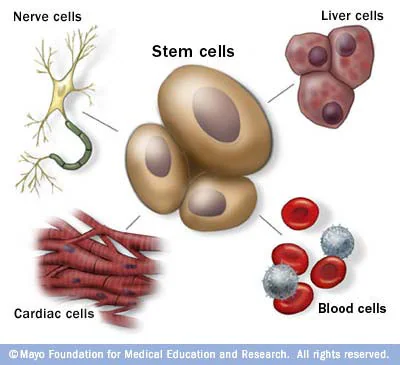
What are stem cells?
Stem cells are a special type of cells that have two important properties. They are able to make more cells like themselves.
That is, they self-renew. And they can become other cells that do different things in a process known as differentiation.
Stem cells are found in almost all tissues of the body. And they are needed for the maintenance of tissue as well as for repair after injury.
Depending on where the stem cells are, they can develop into different tissues.
For example, hematopoietic stem cells reside in the bone marrow and can produce all the cells that function in the blood.
Stem cells also can become brain cells, heart muscle cells, bone cells or other cell types.
There are various types of stem cells. Embryonic stem cells are the most versatile since they can develop into all the cells of the developing fetus.
The majority of stem cells in the body have fewer abilities to give rise to cells and may only help maintain and repair the tissues and organs in which they reside.
No other cell in the body has the natural ability to generate new cell types. Why is there such an interest in stem cells?Researchers are studying stem cells to see if they can help to:
People who might benefit from stem cell therapies include those with leukemia, Hodgkin disease, non-Hodgkin lymphoma and some solid tumor cancers.
Stem cell therapies also might benefit people who have aplastic anemia, immunodeficiencies and inherited conditions of metabolism.
Stem cells are being studied to treat type 1 diabetes, Parkinson's disease, amyotrophic lateral sclerosis, heart failure, osteoarthritis and other conditions.
Stem cells may have the potential to be grown to become new tissue for use in transplant and regenerative medicine.
Researchers continue to advance the knowledge on stem cells and their applications in transplant and regenerative medicine.
Before giving drugs in development to people, researchers can use some types of stem cells to test the drugs for safety and quality.
This type of testing may help assess drugs in development for toxicity to the heart.
New areas of study include the effectiveness of using human stem cells that have been programmed into tissue-specific cells to test new drugs.
For the testing of new drugs to be accurate, the cells must be programmed to acquire properties of the type of cells targeted by the drug.
Techniques to program cells into specific cells are under study. |
0 Comments
Join the conversation
Be the first to comment
Share your thoughts above.